Mapping
Comparative Map of Robinson Crusoe and its Inspirations
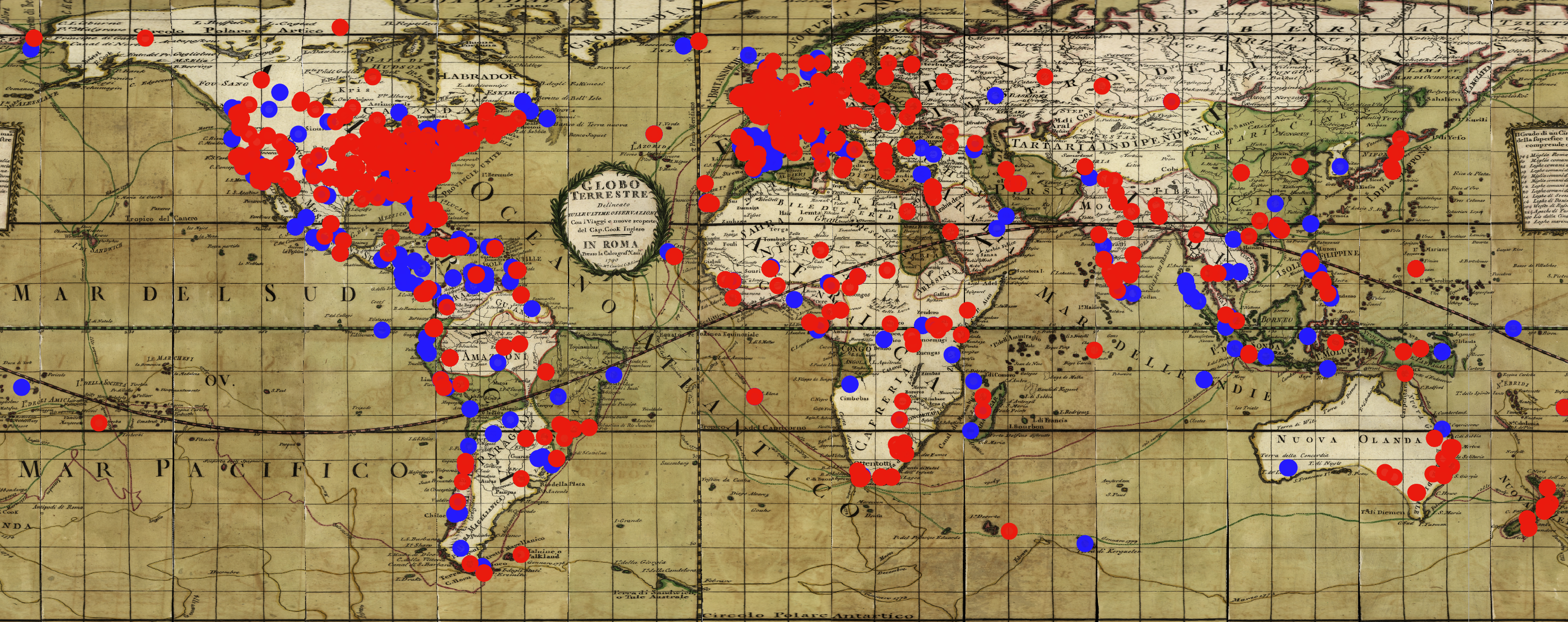
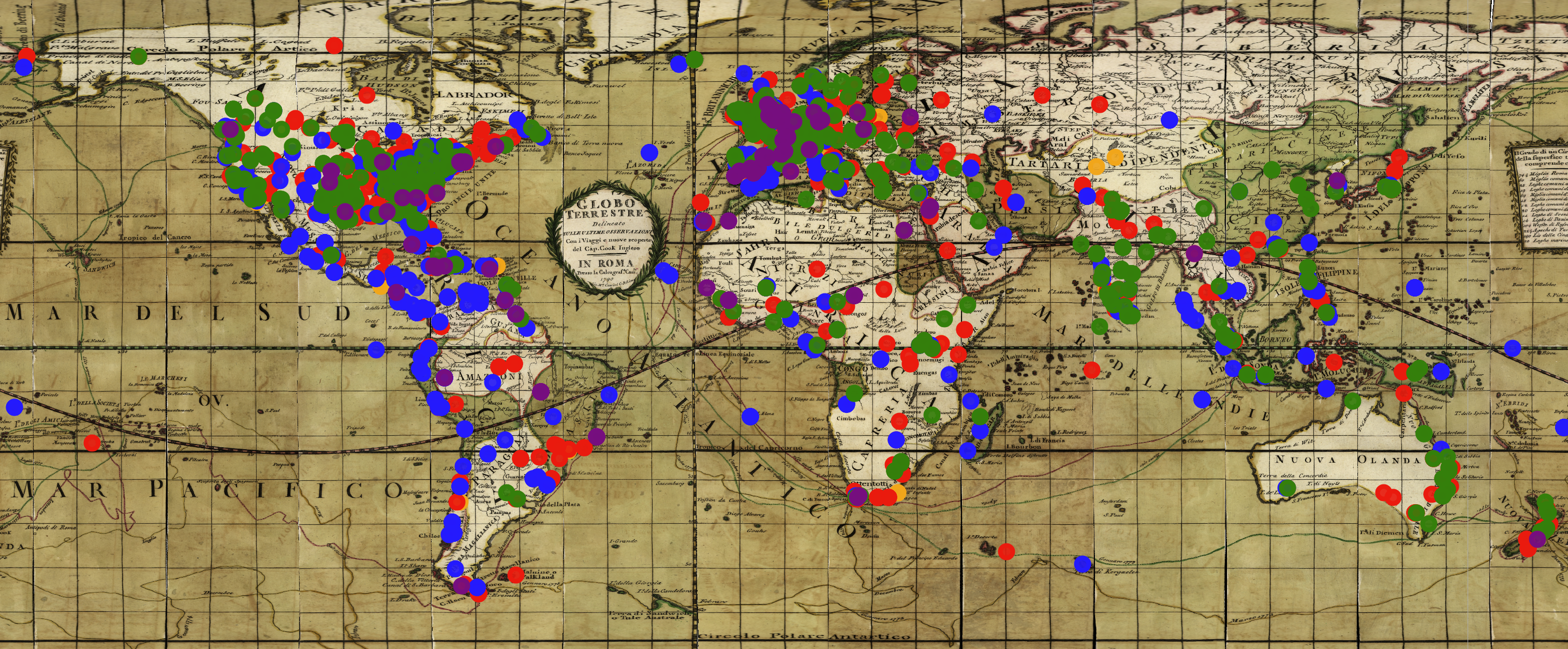
This is a map of the possible inspirations for Robinson Crusoe. There are four texts layed against Robinson Crusoe (purple). An Historical Relation of the Island Ceylon (Green), A New Voyage Round the World (Blue), A Cruising Voyage round the World (red), The Man in the Moone (yellow).
Reading the comparative map
By strictly considering the data in front of us (for a discussion of everything that went wrong with the data, please see the mapping section), there are a few conclusions we can draw. First, we can see that there is no single text that perfectly matches the trajectory of Robinson Crusoe, but this was never something that was expected. There are parts that line up quite nicely. For example, An Historical Relation of the Island Ceylon and Robinson Crusoe visit similar places in West Africa, and A New Voyage Round the World and Robinson Crusoe visit similar places in South America. All of the texts have heavy activity in Europe, which is logical, as Europe was a starting or ending point for many of these voyages, given their colonial context. In fact, the activity across Europe is so heavy that it raises the question of whether mapping is a useful methodology for the research question I have been trying to answer. No meaningful conclusions can be drawn from this portion of the map, especially when one considers that specificity was a key concern going into this project. Could other texts that came before Crusoe also have left from Hull or visited the same points in West Africa? We cannot know with this map, as it is too noisy.
The Man in the Moone
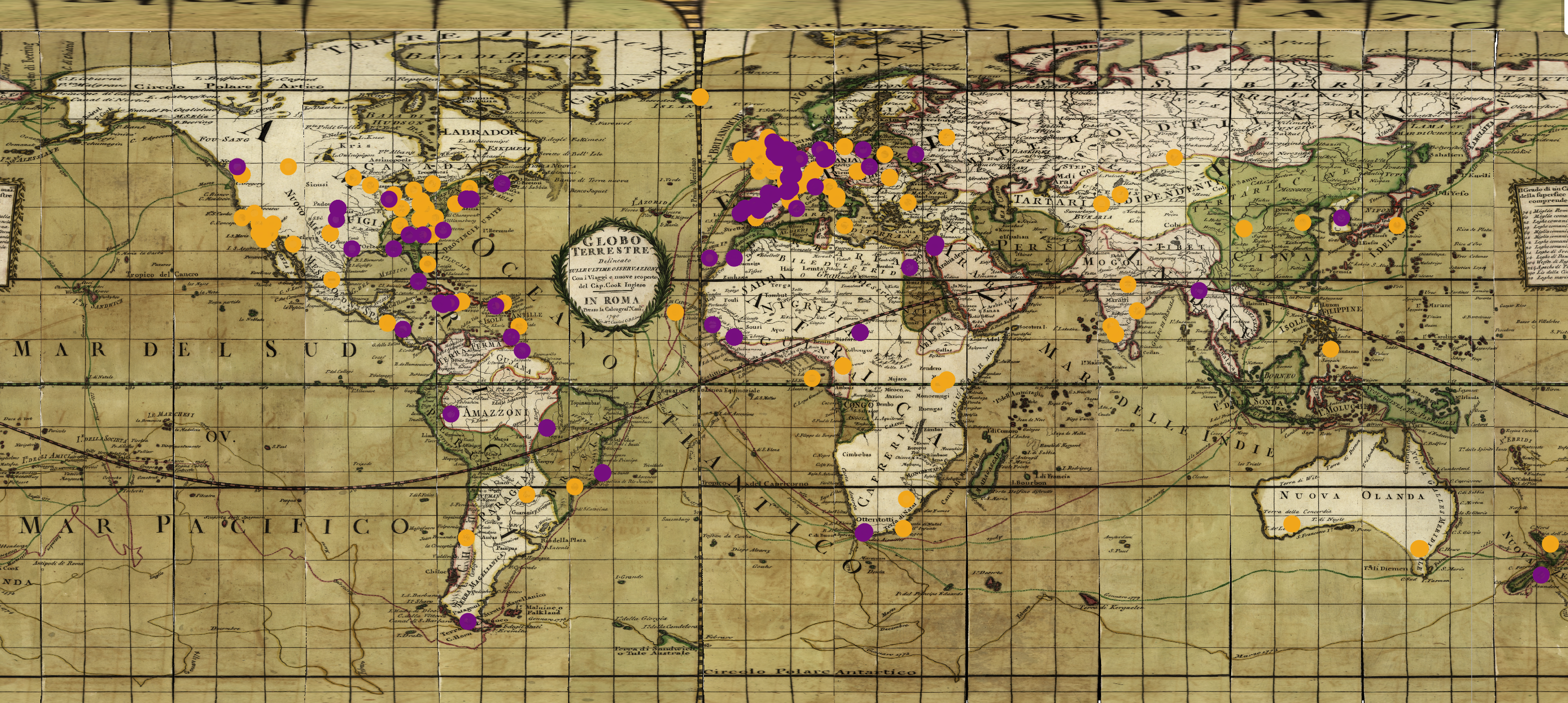
The comparison between Robinson Crusoe and The Man in the Moone yields interesting results. They have a similar number of locations, and those locations are distributed similarly. We see heavy activity in Europe and lighter activity in Africa and South America. Both have significant activity in North America; however, we know that this is not the most accurate set of data. Nevertheless, these two sets of coordinates are quite comparable.
An Historical Relation of the Island Ceylon
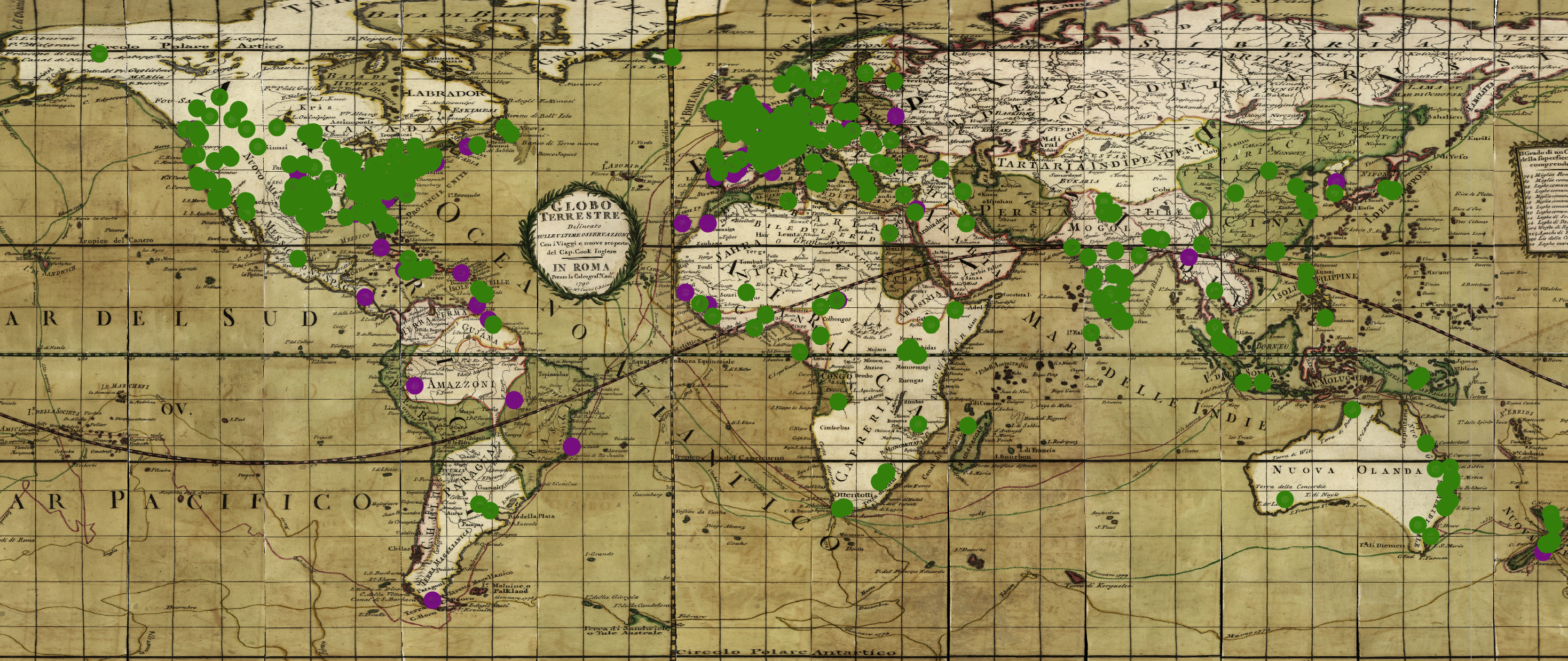
The comparison between Robinson Crusoe and An Historical Relation of the Island Ceylon shows that although these texts seem comparable on the map with all the texts, when contrasted one-on-one the similarities are not as quick to jump out. Yes, both of these texts spend some time in Africa and start in Europe, but this is where the similarities end. Crusoe heads to South America to live out the rest of his book, and Robert Knox heads to Ceylon.

A New Voyage Round the World
The comparison between Robinson Crusoe and A New Voyage Round the World ultimately tells us more about the latter than it does about Robinson Crusoe. We can trace major developments in A New Voyage Round the World, but the similarities between the two texts are not immediately apparent.
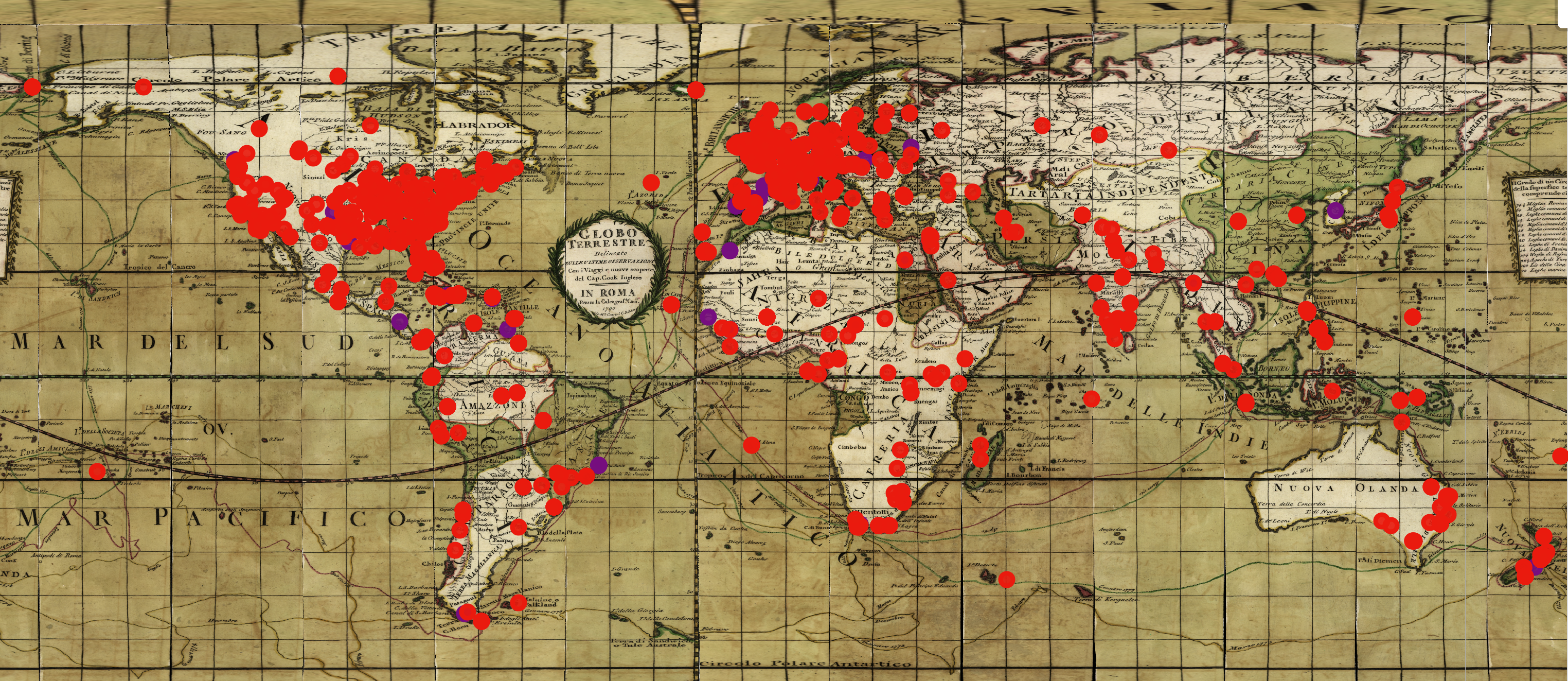
A Cruising Voyage Round the World has a very similar distribution pattern to A New Voyage Round the World. Unfortunately for Robinson Crusoe, the maps are not a strong match in terms of similarities.